Cambridge OCR’s panels at the Festival of Education in three quotes
14 July 2026
How do we finally realise the potential of vocational qualification? Will assessment look the same in 2036; and do we really want it to? Why are so many students voting with their feet?
At this year’s Festival of Education, Cambridge OCR wanted to ask searching questions about the topics that mean most to teachers. At our three panels we invited more than 15 experts to speak in front of a combined audience of hundreds of teachers and educators.
Vocational qualifications, student engagement and the classroom of 2036, were the topics debated as Cambridge OCR brought together over 15 education experts to discuss the issues prioritised by teachers at the Festival of Education.
With a focus on addressing the issues that teachers, schools and colleges had raised to us as priorities, the panels aimed to bring together expertise but importantly also share and celebrate the excellent practice that is already happening around the country.
Here is a flavour of our festival panels in three quotes.
Myles McGinley, Managing Director of Cambridge OCR: “I feel passionately that exam boards like Cambridge OCR are not just responsible for the assessment that happens at the end of a qualification but that we have a role to play in supporting teachers with the issues at the heart of this discussion today: student engagement.
“Exam specifications need to have the right content and the right amount of content to support teachers in creating valuable learning experiences; teachers need to have space to do that. Time to explore concepts and topics deeply and to revisit them.”
Myles made these comments while chairing Cambridge OCR’s panel Voting with their feet: How do we get students back into the classroom?
The panel included current and former teachers (including one who swapped the profession for stand up comedy), as well as the youth voice and education experts and authors.
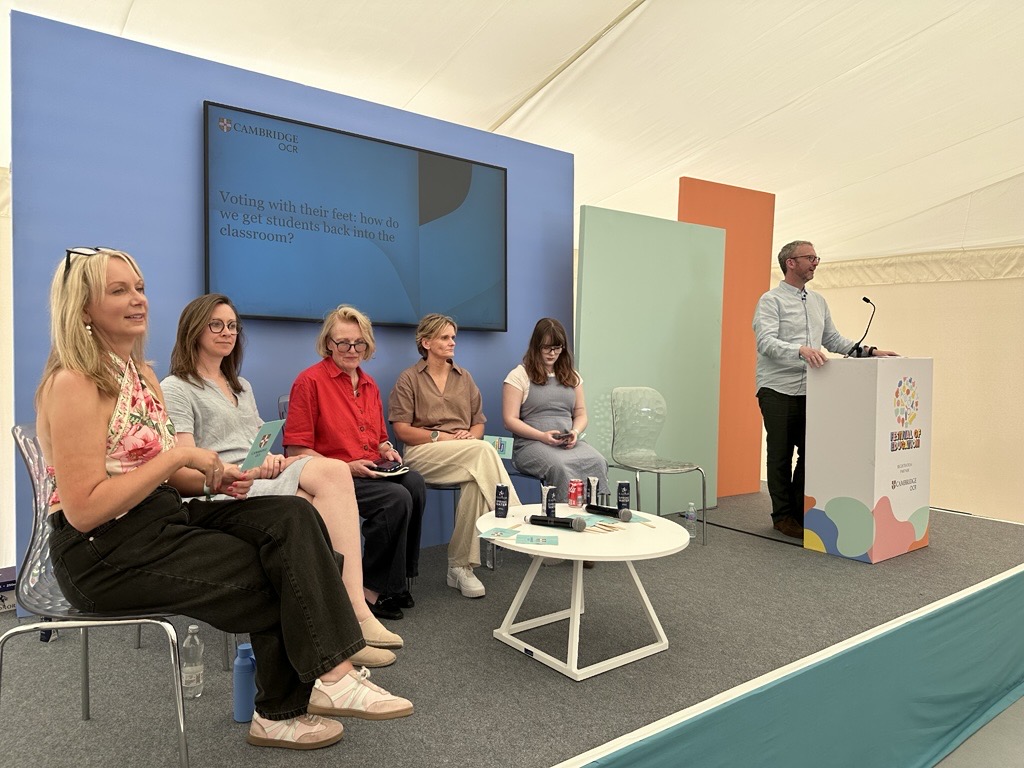
The panel agreed that students needed to feel a sense of belonging and community, a relevant curriculum that goes beyond focusing on exams, and that education could be challenging and rewarding without being inaccessible. Cambridge OCR is continuing its work to make assessment straightforward and improve accessibility to help teachers keep their students engaged.
Claire Green, Post-16 and Skills Specialist at the Association of School and College Leaders (ASCL): “There is broad support from our members for V Levels, but also a lot of questions. The overriding questions are practical: What can I deliver and when? Does this qualification continue this September and next? When will I know what my future offer looks like?
“ASCL members would also like to see V Levels available in more than a single size (360 GLH), giving providers greater flexibility to meet the needs of different learners and to build programmes that work alongside the wider post-16 curriculum.”
This panel, V Levels: What we know, what we don’t, and when we’ll find out, gave teachers an opportunity to find out more about the fast-approaching reforms to V Levels, with Cambridge OCR experts giving advice on what teachers should expect next, and what they need to prepare, but also giving the audience a chance to ask questions and give their own views.
There was a strong teacher and leader representation on this panel, including Adam Steels, 16-19 Study Programmes Curriculum Director at the Meridian Trust and Judith Fish, Head of Curriculum at Pudsey Sixth Form College. Claire Green from ASCL gave the viewpoint of education leaders, while Cambridge OCR managing director Myles McGinley spoke passionately about the opportunity to finally realise the potential of vocational qualifications. Myles was joined by Cambridge OCR’s Post-16 Reform and Transition Lead Nicola Raphael on the panel, hosted by education author and advisor Matt Bromley.
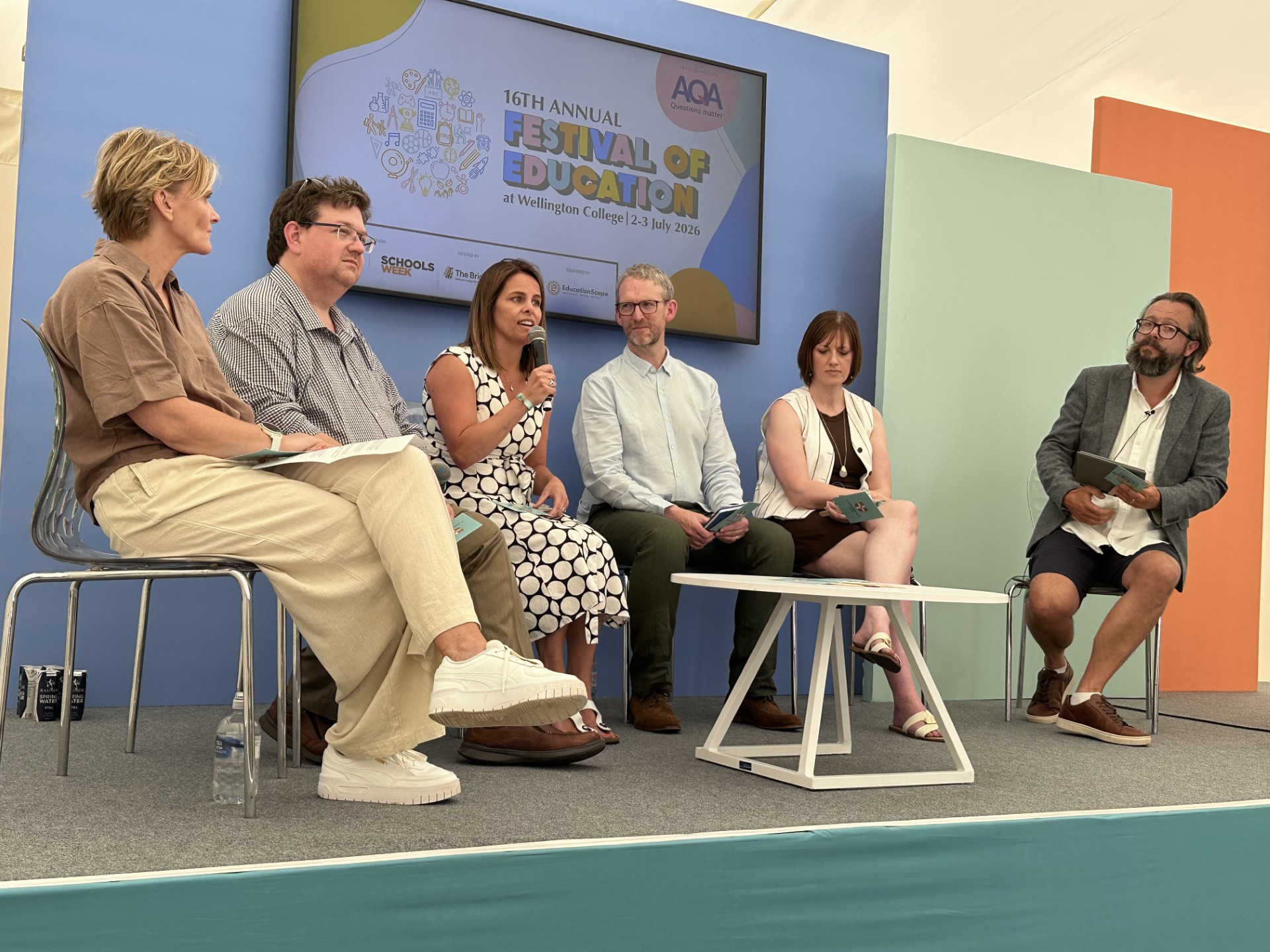
The panel agreed that the reforms to vocational were a positive opportunity, but there were still a lot of unknowns and teachers would need adequate support to make V Levels a success.
And as Cambridge OCR’s Nicola Raphael reminded the audience, we are here to work through the unknowns with schools and colleges, and be their transition partner as the sector moves to V Levels.
James Beadle, Senior Professional Development Manager at Cambridge OCR: “Whether you’re teaching Cambridge OCR or not, our AI guidance is available to all. It gives advice on the appropriate and inappropriate ways to use AI in different assessments: not just whether it is permitted but whether we think it would help them in their non-exam assessment. It’s not fair to expect teachers and schools to do this by themselves.”
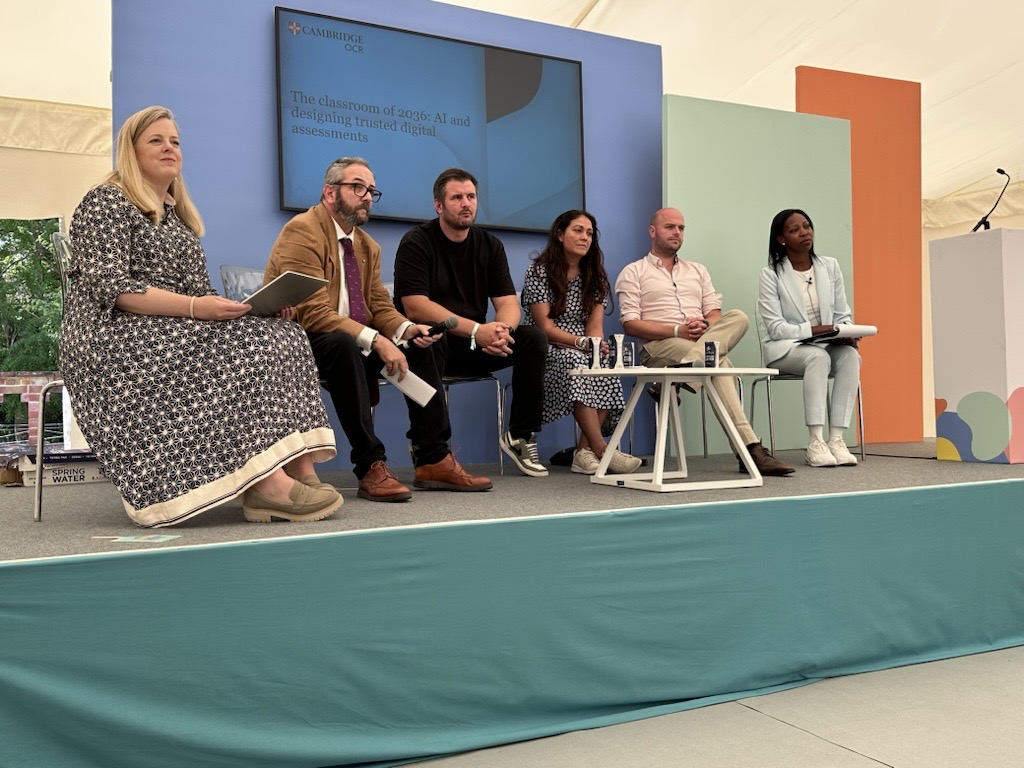
Our last panel of the festival looked ahead to the future, asking participants what they thought education might look like in ten years’ time, and what they hoped it wouldn’t look like. Among the chief concerns of the panel of AI and digital learning experts was the need for infrastructure and investment to ensure new digital divides don’t open up between schools that have embraced technology and those that haven’t. The threats and opportunities of AI were also debated, with agreement that more support was needed for schools and educators, but that education couldn’t afford to be slow in adapting to the new AI reality.
Watch a highlights video from our panel members.