Think like a sociologist: discover research methods in action
27 October 2026
Tom Genillard, Cambridge OCR Sociology and Criminology Subject Advisor, and Felicity Eden, Head of Social Sciences at St Thomas More Catholic School


We know social science teachers are always on the look-out for fresh ways to make the teaching and revision of research methods more engaging.
In this blog, Felicity and some of her students in Blaydon-on-Tyne explore the Archive of Market and Social Research (AMSR), a truly unique resource with research that’s specifically signposted to the Cambridge OCR A Level Sociology specification.
The AMSR and making assessment straightforward
Our commitment to making assessment straightforward and accessible is nothing new. We know that, for many 16 to 18-year-olds, research methods can feel like a challenging and sometimes uninspiring topic. Yet success in exams depends on developing a secure understanding of key concepts and knowing how to apply them with confidence. That's why we continue to create resources and support that help students build this knowledge in a clear and engaging way.
The Archive of Market and Social Research (AMSR) aims to preserve the work of the Market and Social Research Industry from the past 60+ years. The digital archive is a real treasure trove – and it’s free to access and easy to use.
The AMSR is a mine of archive material on how people in Britain thought and felt in the post- war years. As well as quantitative data on opinion polls and public attitudes, it includes qualitative studies on a multitude of topics, from advertising to cultural trends.
It contains useful research for a wide range of A Level subjects including modern British history, media studies and politics. It is also a perfect resource for sixth form enrichment activities or to support Extended Project Qualifications (EPQs).
The archive can help your teaching and learning in various ways:
- Developing students’ critical thinking skills
- Teaching new and important archive/research/digital skills
- Bringing recent history to life and shedding new light on issues we face today
- Increasing students’ engagement with their studies.
The teacher perspective
Felicity Eden shares her thoughts on using the AMSR.
Although I had been teaching for 12 years, introducing A Level Sociology last year was a new challenge, having not studied the subject myself for two decades. We chose Cambridge OCR for its strong teaching resources and engaging specification.
The AMSR has been particularly valuable, helping to bring research methods to life by allowing students to explore, critique and reimagine real-world studies for today’s context.
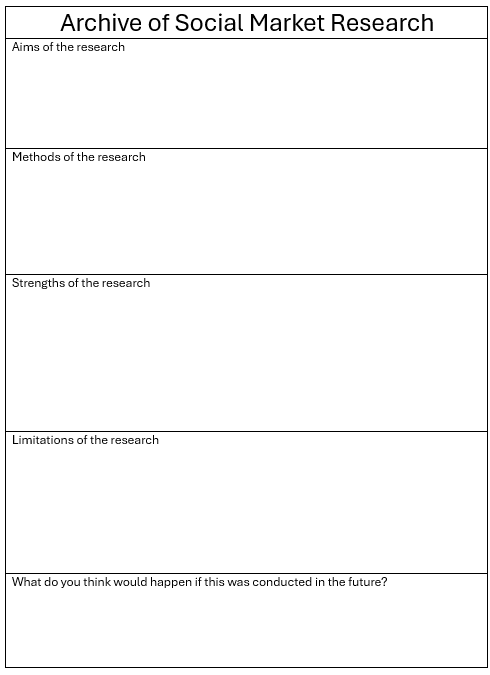
For Paper 2, students need to evaluate the strengths and limitations of different research methods and studies. Using the archive, students explored real-world research on topics that interested them, with the death penalty proving particularly popular. They were asked to identify the aims of a study, evaluate its strengths and limitations, and consider how it might be conducted differently today.
This approach brought research methods to life, encouraging students to engage critically with real data and apply their sociological thinking in meaningful ways. The discussions that followed were thoughtful, insightful and far more engaging than simply learning research methods from a textbook.
Over the past few months, students have used findings from the archive to design and conduct their own research projects on a range of contemporary issues, including questions such as ‘Is there a crisis in masculinity?’ Using both qualitative and quantitative methods, they have developed questionnaires, carried out interviews and reflected critically on the strengths and limitations of their data collection.
These projects have sparked engaging discussions around topics such as class, gender and national identity, while highlighting the breadth and relevance of social research. For many students, the experience has even inspired ambitions to publish their own research in the future.
Student voices
Three of Felicity’s students share their thoughts on using the AMSR as part of their Sociology A Level.
“I use the archive in sociology to help my wider research outside of the classroom. The archive is fantastic as it is super easy to access with specific subject sections to assist with my wider learning. The archive has been useful for assisting and shaping my Sociology A Level revision for free.” Freya
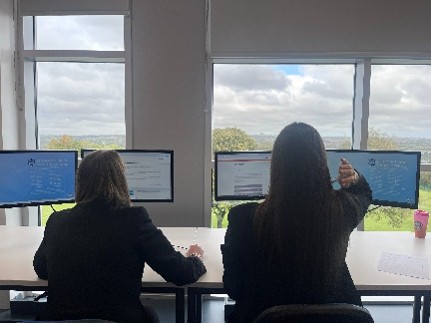
“I found the ASMR really beneficial when it comes to doing extra reading for sociological issues such as the use of cannabis and its impact on society, which I can use in topics like crime and deviance in Sociology A Level. I also find it a useful tool for when it comes to extra research, to use for easy marks on essays.” Lucas
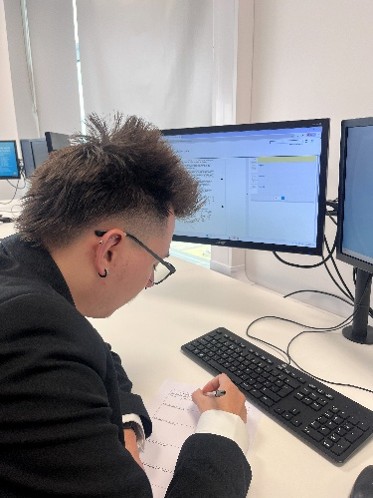
“I have found the archive very useful when reading and understanding how real research works. It is really helpful when conducting our own research, to read the clear aims, strengths and limitations along with the questions and results. I have used this when looking at our own research topics, and to understand the full process of researching in Sociology.” Ash
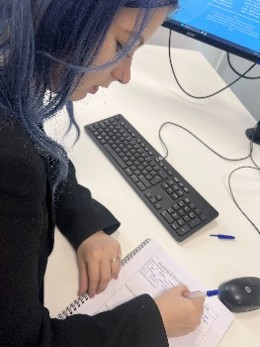
Resources
There’s a great range of hand-picked sociology archive resources on AMSR.
The following form could be useful for students to analyse specific research studies:
We also have extensive sociology teaching activities page on Teach Cambridge.
Stay connected
If you have any questions, you can email us at sociology@ocr.org.uk or call us on 01223 553998. You can also connect with Tom on LinkedIn.
Check out our previous blogs on promoting the social science subjects via open evenings and reimagined careers pathways.
You can also sign up to subject emails to keep up-to-date with the latest news, updates and resources on criminology or sociology and our planned new refreshed A-Level course.
If you are considering teaching any of our qualifications, use our online form to let us know, so that we can help you with more information.
About the author
Tom is overseeing AS and A Level Sociology as well as any future new criminology qualification. Previously, he was a teacher for 11 years which included various roles in teaching and middle management leading to his last role, as Head of Social Sciences. He is a trustee for the Sociological Review Foundation, who are keen to engage, support and work with A Level teachers and students. In his spare time, he enjoys playing sport, watching crime documentaries and playing with his two sons.
Felicity Eden has been Head of Psychology and Sociology at St Thomas More School, for the past ten years. She is also and Subject Lead for Sociology and Psychology for the Bishop Wilkinson Catholic Education Trust. As an educator, she is always looking for innovative ways to develop her practice and enrich the learning experiences of her students. Teaching sociology has quickly become one of the most rewarding aspects of her role. She has thoroughly enjoyed exploring the subject with students and helping them develop a deeper understanding of the social world around them. Outside of school, Felicity enjoys running, hiking in the Lake District, and travelling across Europe in a camper van.
Related blogs